Sharing a graph
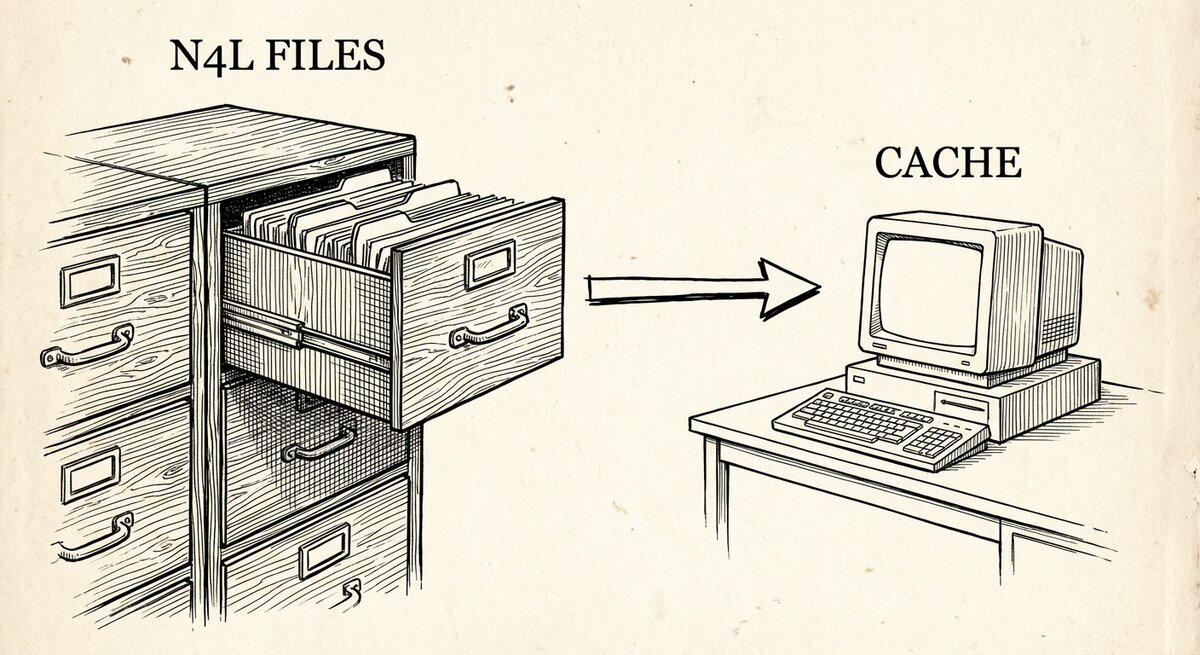
Share the files, not the database. Your N4L files are the graph; the database is a cache anyone can rebuild from them in seconds.
A collaborator does not need your PostgreSQL, your credentials, or a snapshot. They need the text files you wrote. Given those, one command on their machine produces a graph identical to yours.
The short version
Give them a directory of .n4l files — over a git remote, a zip, a flash
drive, anything that moves text around. On their end:
Same nodes, same arrows, same query answers. The database on their machine is new; the graph in it is yours.
A concrete example
The repo's reading-list example works as a demo. Clone or copy the folder
that contains examples/reading-list.n4l, hand it to a colleague, and
they run:
They see the same three books you see. Nothing else was transferred.
What not to share
~/.SSTorytime. It holds a plaintext password. It is theirs to create on their own machine, with their own database credentials, and to keepchmod 600.- The PostgreSQL data directory. It is a cache of what is already in
the
.n4lfiles. Copying it wastes bytes and ties the recipient to your exact PostgreSQL version.
What you might share as well
If you have defined your own arrow vocabulary — shorthand names beyond
what ships in the project — the arrow declarations live in SSTconfig/.
Hand that directory over along with the .n4l files so their ingest
recognises the same arrows yours does.
If you have not touched SSTconfig/, nothing extra is needed.
Across machines, across people
There is no special protocol and no server in the middle. Sharing a graph is sharing files; the graph reappears wherever those files are ingested. Version-control them and the sharing story becomes the same one you already use for code.